Itchy Skin
Allergy Support
An
effective approach to managing skin allergies has three components.
Firstly you must understand the condition,
 Many
people think that allergies only affect the respiratory or digestive
systems, but they can also affect your largest organ- your skin. As with
other allergies the immune system overreacts to the presence of certain
substances and releases inflammation-producing chemicals. Do some
research and talk to your doctor. You can be confident of controlling
your skin condition better if you are sure you understand what causes
it.
Many
people think that allergies only affect the respiratory or digestive
systems, but they can also affect your largest organ- your skin. As with
other allergies the immune system overreacts to the presence of certain
substances and releases inflammation-producing chemicals. Do some
research and talk to your doctor. You can be confident of controlling
your skin condition better if you are sure you understand what causes
it.
Then you must discover if
anything is triggering your skin reaction,
The
second component in managing a skin allergy is identifying then
eliminating the allergens and irritants that start the
itching/scratching cycle. There are over three thousand known triggers
for skin allergies. Many are natural, but there are plenty of man-made
ones too.
 A
common man-made trigger is latex, which comes from the sap of the
Brazilian rubber tree. The natural proteins and those added in the
manufacturing process can trigger an allergic reaction. Most people are
aware that this can lead to reactions if you wear latex gloves. However
latex is also present in baby pacifiers, balloons, pencil erasers and
elastic bands in undergarments. There can also be problems when latex
particles become airborne and are inhaled. If you have a latex allergy
try to avoid the material and use vinyl or plastic where possible
A
common man-made trigger is latex, which comes from the sap of the
Brazilian rubber tree. The natural proteins and those added in the
manufacturing process can trigger an allergic reaction. Most people are
aware that this can lead to reactions if you wear latex gloves. However
latex is also present in baby pacifiers, balloons, pencil erasers and
elastic bands in undergarments. There can also be problems when latex
particles become airborne and are inhaled. If you have a latex allergy
try to avoid the material and use vinyl or plastic where possible
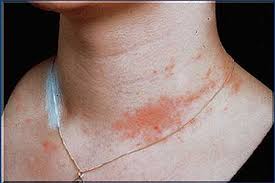 Nickel
is another trigger. In addition to the obvious nickel-containing
metallic objects like coins and jewelry, nickel is also present in
everyday objects like scissors, bathroom and kitchen cabinet handles,
and zippers. Mascara, eye shadow and eye pencils also contain nickel.
Experts estimate that the number of people suffering from a nickel
allergy has risen about 40% in the last decade. Much of this is believed
to be due to the popularity of body piercing. Some foods also have
natural nickel content and people who suffer severe symptoms may need to
restrict their diet under medical supervision. At present there is no
way to desensitize a person with a nickel allergy. Avoidance is the best
strategy.
Nickel
is another trigger. In addition to the obvious nickel-containing
metallic objects like coins and jewelry, nickel is also present in
everyday objects like scissors, bathroom and kitchen cabinet handles,
and zippers. Mascara, eye shadow and eye pencils also contain nickel.
Experts estimate that the number of people suffering from a nickel
allergy has risen about 40% in the last decade. Much of this is believed
to be due to the popularity of body piercing. Some foods also have
natural nickel content and people who suffer severe symptoms may need to
restrict their diet under medical supervision. At present there is no
way to desensitize a person with a nickel allergy. Avoidance is the best
strategy.
Thirdly you must look
after your skin.
The
third component of effective management is looking after your skin. The
easiest thing to do is to keep your fingernails short to reduce the
damage caused by scratching.
Managing
your skin's condition means firstly moisturizing and softening the skin
to ensure it does not dry out. Your doctor may recommend you use
topical corticosteroid preparations to control the inflammation.
When
you take a bath soak in lukewarm water for 20 to 30 minutes. Do not
have hot baths or showers, as the heat will increase skin dryness and
itching. You can add oatmeal or baking soda to the bath for a soothing
effect, though it does not help moisturize the skin.
Use
a mild soap or a non-soap cleanser with neutral pH (pH7). If you wish
to add bath oils do so after you have been in the water so that it can
seal in the moisture. Do not use bubble baths as they can form a barrier
that stops the bathwater moisturizing your skin.
After
the bath dry yourself by patting your skin with a soft towel. This
helps retain moisture. Immediately after drying your skin apply a lotion
or emollient cream to help your skin retain the moisture.
To
look after your skin you will also need to avoid situations where you
will experience extreme physical contact, heavy perspiration, or heavy
clothing. This may mean avoiding some sports. Swimming is permissible if
you rinse the chlorine from your skin as soon as you leave the pool,
and use a moisturizer after drying yourself.
Follow these three steps and you will be able to control your skin allergy and minimize its impact on your everyday life.


ReplyDeleteGreat tips. Thanks for your article